
Does art still function as art?

Surprising no one, I’ve already fallen behind on my monthly posting schedule—oh well.
Greetings from the shadow of the Sandia Mountains. As of this writing, the light has slowly carved the mountains out of the night and, to the south, the sky is pink with the first bloom of day. After a busy fall semester, I’m looking forward to the holiday break, where I can make some progress on my various projects on pause—this post being one of them.
Since my last post, I got a new puppy. Meet Yumi “Yip Yip Halloumi,

I made a medication error for poor Gary Baby that caused him to spend an evening at the emergency vet (he’s fine now),

and we got a new car. In such an eventful month, two wins out of three ain’t bad.
As promised, I’m delivering a radical definition of what art “is,” but while researching and working on an essay, I realized there’s more to say than can fit in a single post (nobody wants to read a few thousand words on their phone in one sitting). So, I’m breaking it up into three sections. I hope you stick around for all of it. For now, I present part one,

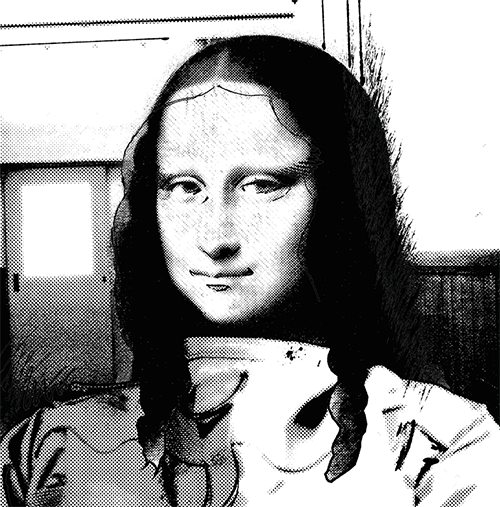
They’ve been told that she has an enigmatic smile, that her eyes follow you when you move, and, to really appreciate her, you have to see her in person. For this, roughly 30,000 people a day queue up for hours to get their fifteen seconds in front of the most famous face in history, which, by the way is locked behind ballistic glass and roped off to keep anyone from getting too close—not to mention the crowd, and the cameras and phones in the air, those must be contended with to see anything of it at all. This is how you experience, arguably, the most recognized work of art in history. We conventionally call it The Mona Lisa, though its official title is la Joconde.
The average viewer briefly sees the painting before the surging crowd washes them into the hallway with little more time than to take a souvenir snapshot. One can hardly appreciate the smoky sfumato technique that hides the trace of a brush or contemplate the composition or the lighting. And if there’s no time to evaluate the formal qualities, then there certainly isn’t time to find any meaning in it. If this is the case, does The Mona Lisa function as art any longer? Can it offer an aesthetic experience? I argue no. To view it in person is to submit to an automated and fully mediated experience in which the institution has prescribed a process for visiting it, then dictated what the art means and what to look for within it—all designed to service the greatest number of visitors possible.
The Louvre disagrees with me. As an institution of authority in the arts, through the force of its expertise, it defines what “is” art. 30,000 people a day seem persuaded enough by this. They visit The Mona Lisa because they heard it’s important. However, if the experience of a work of art is totalized, it is not free to generate any contemplative or aesthetic experience on its own. Therefore, it no longer functions as art; it dysfunctions as art. Like The Mona Lisa, the experience of most of the art we encounter is totalized, though in different ways and to varying degrees, and so art generally dysfunctions. This is because it seems self-evident that art is found in the product of the artist, the art object. But this view neutralizes the aesthetic power of art by opening it up to commodification, collectability, and for the practice of art to be professionalized, among other possibilities. Once art succumbs to any end other than being an end in itself, it is reduced to a means and is no longer free. By engaging with common conceptions of what art is and critiquing them, we might come to a definition that allows art to function on its own terms and thereby claw back some of its autonomy.
In short, we’ve been looking for art in the wrong place. It’s time to sweep away the leaf litter of common assent, to reach past the buds and blooms that distract, and excavate the roots of the phenomenon.

Thanks for reading through to the end. Next time, I’ll break down four common conceptions of art and show how they contribute to the dysfunction of art. And, just so I don’t drag things out too long, right now, I’ll spoil the conclusion of the post after that—art is not located in the art object but, because of our interpretive capacity as rational beings, it actually originates in practical experience.
Until next time…
Defiantly,
Pinello
One last thing…
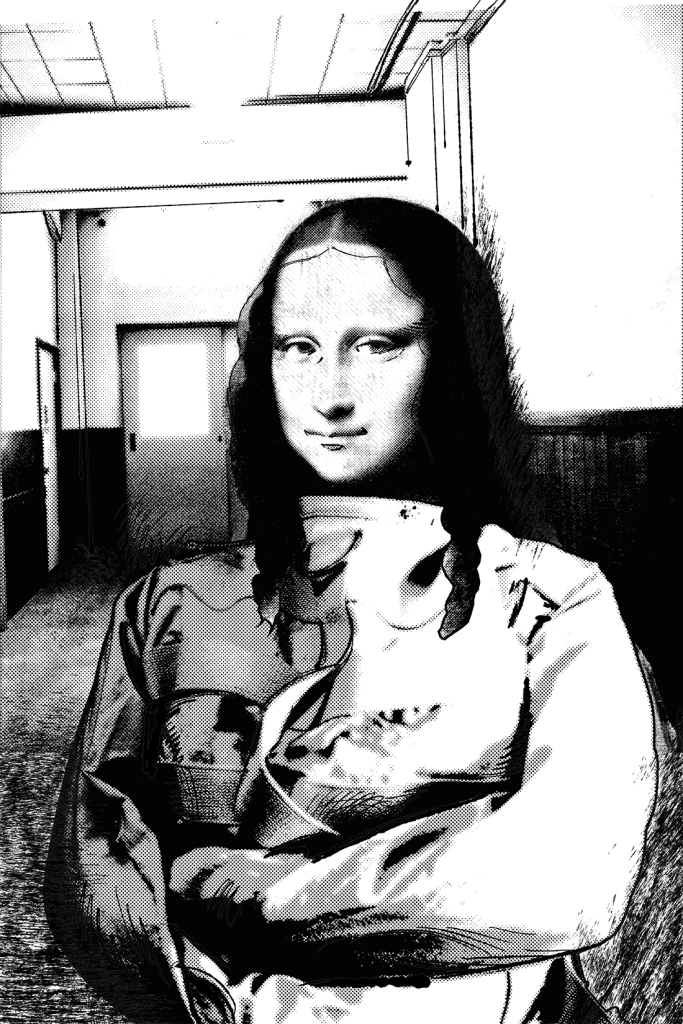
Here’s a work-in-progress pic for a screen print I made to go along with this series of posts. It reflects the way art institutions constrain the autonomy of art.

 Defiant press